
Insurance in 2026: Trust, technology, and the human experience

In 2026, the differentiator for insurers is no longer access to technology, but confidence in how it is applied. New tools, new expectations, and new pressures continue to reshape how insurers operate and how people engage with coverage. What feels different this year is not the pace of change, but where confidence is being built or lost along the way.
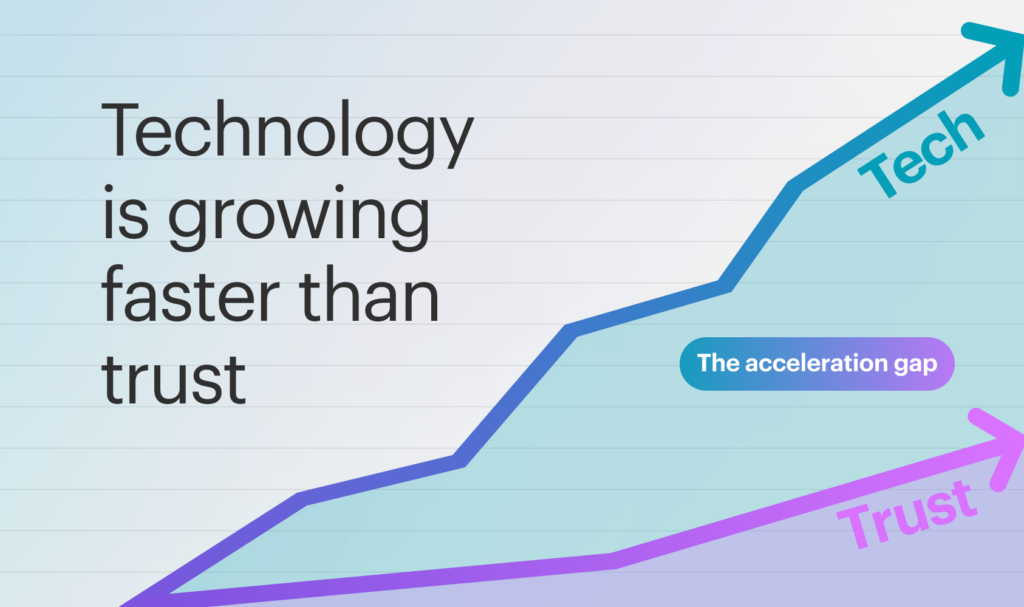
Across our work with insurers, brokers, and employers, we keep coming back to the same tension. Technology is advancing quickly, but trust is still earned slowly. Human-centered design is no longer optional, yet it is still too often treated as secondary to security, scale, or compliance. And transformation efforts that look strong on paper can stall when teams and users do not feel confident in what is being built.
This report reflects what we are seeing and learning as we work alongside insurance teams, viewed through strategy, UX, design, and technology perspectives. Each section stands on its own, highlighting where trust is being built, where it is fragile, and how human-centered systems are shaping insurance experiences heading into 2026.
Throughout this report, security, privacy, and data stewardship are treated as foundational, particularly as AI, automation, and third-party tools become more embedded across insurance workflows.
Data, AI, and security: Readiness before acceleration
AI is no longer a future-state conversation in insurance. Many organizations are already experimenting, piloting, or actively planning how AI fits into underwriting, claims, analytics, and customer service. What we are observing, however, is that progress depends less on the models themselves and more on readiness.
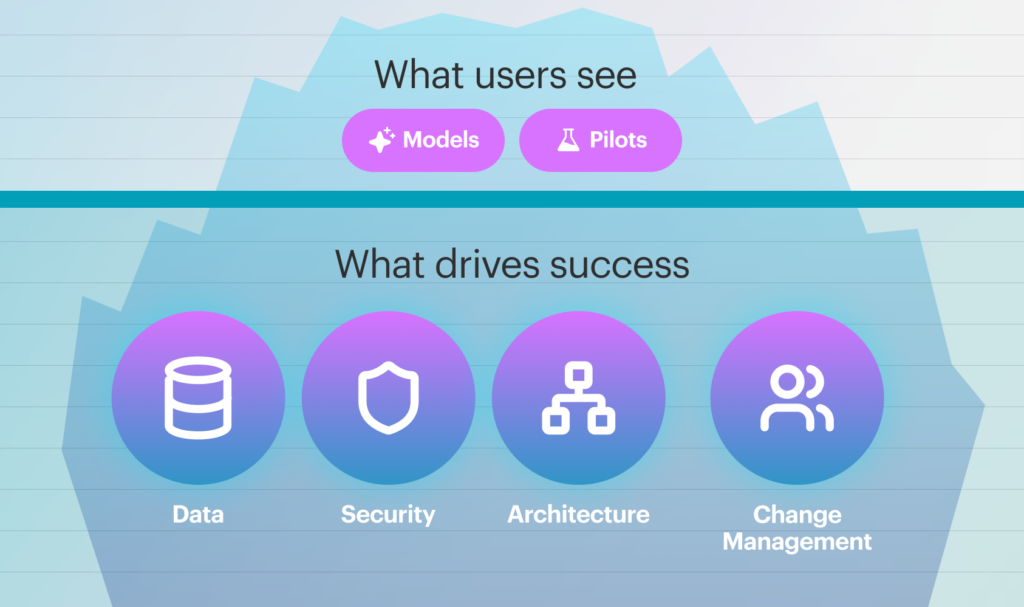
Industry research consistently reinforces this. AI tends to scale unevenly when foundational elements are misaligned.1 Data quality, modernized architecture, and security practices aligned to how systems actually operate matter more than any single tool. Notably, research shows that a significant portion of AI transformation success comes from change management rather than technology alone.
Strategy
From a strategic standpoint, AI remains a sensitive topic for many insurers. Leaders want to understand how AI fits into long-term core system decisions and how to adopt it confidently without overselling outcomes. Risk aversion is not hesitation for its own sake. It reflects the reality of working with regulated environments and sensitive data.
As AI becomes more embedded across underwriting, claims, and service workflows, the security conversation is widening. Risk no longer sits only inside core carrier systems. It now includes third-party platforms, distributors, and automation tools that touch sensitive data. Questions of data ownership, access, and accountability often become more complex, not less, as these tools are layered into existing ecosystems.
We are seeing growing interest in grounding AI conversations with tangible documentation and guardrails. AI assessments, governance documents, and implementation plans help reassure stakeholders that due diligence is in place before experimentation turns into scale.
Technology
An AI-ready architecture does not mean replacing legacy systems all at once. In insurance, readiness often looks like decoupling. Core systems remain systems of record, while APIs and event layers allow AI services to operate without being tightly bound to brittle dependencies.
As AI use cases expand, governed data foundations play a larger role in maintaining consistency and trust. Consistent identifiers, shared definitions, lineage, and quality checks help ensure that terms like premium, exposure, and loss history mean the same thing across systems. Timing matters as well. Many AI use cases depend on acting in the moment, which increases the need for both real-time and batch data pathways.
Security expectations are also expanding. AI model endpoints are now part of the attack surface. Identity, access control, logging, and rollback are increasingly expected to be built in from the start rather than added later.
As AI-enabled workflows integrate with third-party platforms, broker tools, and automation services, technical teams must account for how data moves across boundaries. Managing credentials, permissions, and data flows across these integrations becomes as important as securing the core systems themselves.
UX
Transparency plays a meaningful role in building confidence around AI. Across insurance lines, carriers are increasingly using automation, AI, and data analysis to improve processing speed, accuracy, and customer experience. Trust improves when users understand what the system is doing, what qualifies for faster resolution, and when human review is required.
Transparency also includes acknowledging limits. AI systems can behave unpredictably, even with guardrails in place. Being clear about where automation is used, where people are involved, and how decisions can be reviewed or corrected helps build confidence rather than erode it.
Design
Design contributes to AI confidence through restraint. Clean layouts, clear hierarchy, and straightforward explanations help experiences feel secure and sophisticated without intimidating users. Overexplaining or overdesigning often signals uncertainty rather than control.
What this means for insurers
- Confidence in AI is built on foundations, not pilots alone.
- Governance and transparency increasingly shape how AI is trusted and evaluated.
- Security and architectural decisions influence trust long before users encounter AI directly.
Trust and communication: The small moments that matter most
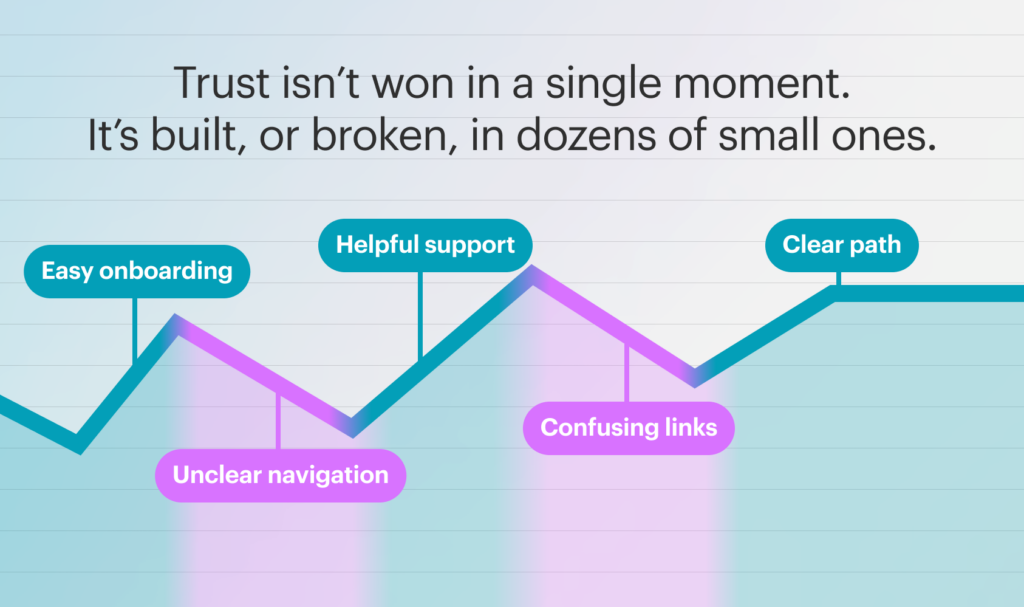
Trust in insurance often takes shape through routine interactions. Seemingly minor details can either reinforce confidence or quietly introduce hesitation as people move through a process, particularly when people are asked to share personal information, complete steps, or interpret system messages.2
Strategy
Automation without clear communication often undermines trust. We see that users respond better to straightforward, concise explanations than to long legal disclosures. Clear, timely explanations of data use tend to establish trust earlier than disclosures buried in policy documents.
UX
Ease and intuitiveness during enrollment and claims have an outsized impact on trust. Users want confidence that they are completing processes correctly. Previews, encouragement during long flows, and guardrails that prevent errors reduce anxiety and increase follow-through.
In our work with employer groups, we have seen that when leadership enrolls first, it creates confidence they can pass on to employees. That early familiarity reduces anxiety and builds trust in both the tool and the organization offering it.
For claims, trust improves when users can view eligibility, claim history, missing information, and document uploads in one place without calling customer service.
Technology
Communication works best when treated as structured content with two renderings. One version satisfies legal and compliance requirements. Another explains, in plain language, what that content means for the person reading it. When paired thoughtfully, systems can support both fidelity and clarity.
Design
Credibility is reinforced through clarity and restraint. Clear hierarchy, breathing room, and subtle motion support understanding without overwhelming users. Overdesign and excessive explanation often signal uncertainty rather than sophistication.
What this means for insurers
- Trust is built through clarity, not volume.
- Communication design increasingly functions as part of the product itself.
- Small interface decisions shape confidence.
Emotional context and empathy: Designing for real-world stress
In 2026, insurance interactions are unfolding in an environment shaped by ongoing volatility, tighter scrutiny, and rising expectations. In these moments, stress is not an edge case. It is the context in which many decisions are made, and the experience itself can either steady people or compound uncertainty.3
UX
Research and project experience consistently show that complex navigation and dense information make decision-making harder.. Thoughtful information architecture helps by delivering information when it is needed, rather than all at once.
Design
Design elements such as color, spacing, and clear visual paths create a sense of calm and direction. Blues, greens, neutral tones, and white space help experiences feel manageable. While recognizable brands may already carry trust, design reinforces how safe and navigable an experience feels.
Strategy
Empathy tends to have more impact when teams can see how it connects to outcomes. Retention, loyalty, and feedback signals help make that connection visible. Personalized tools that help users find the right plan or understand their options show people they are being heard.
Technology
Data and AI can support empathy when used carefully. Timing signals such as a recent claim, a dropped quote, or a call center interaction can guide tone and channel selection without being invasive. Transparency matters. Letting users know why they are receiving a message, and giving them control over preferences, helps personalization feel supportive rather than intrusive.
What this means for insurers
- Calm, clear experiences reduce stress and strengthen loyalty.
- Empathy only scales when it is designed intentionally.
- In high-stakes moments, context matters as much as content.
Value and experience: Making coverage feel useful over time
Value in insurance is often framed around enrollment or satisfaction scores, but users experience value continuously. They feel it when information is relevant, when access is easy, and when systems anticipate needs without overwhelming them.4
UX
Users respond well to dynamic, personalized content that shows only what is relevant to them. Quick snapshots of coverage, real-time balances, and timely reminders reduce confusion and cognitive load. Single sign-on capabilities that eliminate repeated logins also stand out as meaningful value.
Design
Interaction design can reinforce ongoing service value by making information feel approachable and useful rather than transactional. Clear affordances, predictable patterns, and consistent layouts help
Technology
Seamless switching between devices is largely a state-management problem. Persisting progress server-side, supporting save-and-resume, and designing for interruptions all help experiences feel reliable. Predictive tools add value when they are assistive, not noisy. Showing one relevant action, explaining why it matters, and allowing users to control notifications prevents alert fatigue.
Strategy
Different audiences require different approaches. Individuals and families benefit from mobile-first access for quick tasks. HR managers and brokers often complete more complex work at a desk. Brokers and producers, in particular, value frictionless workflows that carry across systems and devices. Understanding who is using which device, and why, increasingly informs whether parity or task-specific optimization makes sense.
What this means for insurers
- Value is felt when experiences remain useful after enrollment.
- Fewer, better signals outperform constant communication.
- Reliability builds confidence more than novelty.
Change and confidence: Progress without disruption
Many insurers have a clear view of where change is needed and why. Translating that direction into action often involves navigating complexity in ways that feel responsible, sustainable, and aligned across the organization.
As platforms modernize and AI becomes more embedded in everyday operations, the work shifts from deciding what to change to coordinating how change happens. Confidence is shaped over time as systems, governance, and decision-making stay aligned, particularly in regulated environments where data protection, consumer trust, and legal accountability are inseparable from innovation.
This section reflects what we are seeing as insurers move from exploration toward execution, with an emphasis on clarity and confidence as change takes shape.
Strategy
One signal we see frequently is a shift from conversation to a Discovery, where options are explored through visualization and proof-of-concept work. As ideas become more tangible, momentum tends to build.
Technology
Modernization efforts that reduce tech debt tend to be intentional. Defining a target architecture, introducing anti-corruption layers, and making decommissioning a deliverable all help shrink complexity over time. When these steps are in place, modernization is more likely to reduce complexity rather than shift it elsewhere.
UX
User-centered design supports internal adoption as much as customer experience. When internal teams can see what customers see, accuracy improves and support becomes easier. Better design reduces manual work and builds confidence internally.
Design
Design systems and guidelines reduce decision fatigue during change. While guardrails may feel restrictive at first, they ultimately reinforce shared understanding and consistency, which supports adoption.
What this means for insurers
- Confidence supports meaningful transformation.
- Governance increasingly provides stability as organizations scale.
- Clarity helps progress compound over time.
Final thoughts
Building confidence in what comes next
The insurance experiences gaining traction in 2026 tend to reflect steady progress rather than rapid adoption. They are shaped by systems people trust and foundations teams feel confident maintaining over time.
Across data, design, communication, and change, the pattern is consistent. Trust is the multiplier. Human-centered thinking makes that trust visible, while strong security and data stewardship make it sustainable. Confidence allows organizations to move forward without losing their footing.
At Creed, we see this work happening incrementally and intentionally. Not through big promises, but through steady progress. That is where meaningful transformation takes hold.
If these themes resonate with your organization, we’d be glad to talk about how to build confidence in what comes next.
Sources
- https://www.mckinsey.com/industries/financial-services/our-insights/global-insurance-report ↩︎
- https://www.forrester.com/blogs/cx-index-2025-results/ ↩︎
- https://www.deloitte.com/us/en/insights/industry/financial-services/financial-services-industry-outlooks/insurance-industry-outlook.html ↩︎
- https://www.jdpower.com/business/press-releases/2025-us-claims-digital-experience-study?utm_source=chatgpt.com ↩︎